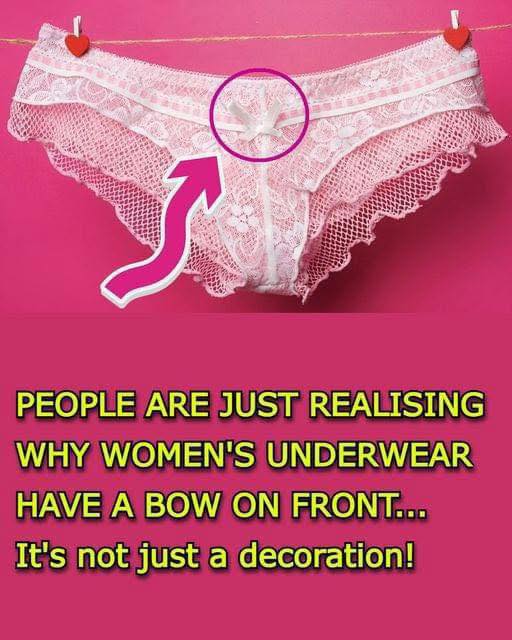
The small bow that often appears on the front of women’s underwear is widely recognized today as a decorative design detail, but its origins are rooted in practical clothing history rather than purely aesthetic choices.
Before the widespread use of elastic fabrics in clothing, underwear and many other garments were designed to be tightened and secured using ribbons or drawstrings. These ribbons were threaded through small openings at the waistband and then tied at the front to hold the garment in place. The bow that appears on many pairs of underwear today is a stylistic remnant of that earlier fastening method. Although modern underwear typically relies on elastic waistbands, the bow remained as a visual reference to the traditional design.
Another practical reason for placing the bow at the front relates to dressing convenience. Historically, many women dressed in low-light conditions before electric lighting was common. A small bow placed at the front of the garment allowed the wearer to quickly identify the front side of the underwear by touch. This made dressing easier and faster without needing to visually inspect the garment.
Over time, as textile manufacturing evolved and elastic materials became standard, the functional need for a drawstring tie disappeared. However, clothing design often preserves certain elements long after their original purpose fades. In the case of women’s underwear, the bow gradually shifted from a functional tie to a decorative feature that designers continued to include because it became associated with the traditional appearance of lingerie.
Today, the bow primarily serves as a visual detail that contributes to the overall aesthetic of the garment. Many lingerie brands incorporate bows, lace accents, or small embellishments to create a more delicate or classic look. While the bow no longer performs its original role of fastening the garment, it remains a recognizable design element that connects modern clothing to historical garment construction.
In practical terms, the bow can still offer a minor benefit by making it easier to distinguish the front of the underwear quickly when folding laundry or dressing. This small feature continues to provide subtle functionality while also maintaining the visual style that has become familiar in lingerie design.
The continued presence of the bow illustrates how fashion often preserves historical details even after technology and materials change. What began as a simple fastening solution eventually evolved into a recognizable decorative tradition that persists in modern clothing design.