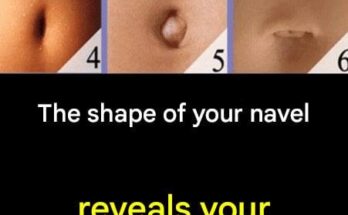
The idea that the shape of your belly button reveals your personality is a recurring example of how visually appealing claims can spread rapidly online despite lacking scientific foundation. Variations of this concept appear frequently across social platforms, often packaged as light entertainment or informal personality quizzes. While such content may attract attention, it does not reflect established psychological research or evidence-based assessment methods.
From a biological standpoint, the shape of a belly button is determined by how the umbilical cord stump healed after birth, along with factors such as scar formation, skin elasticity, and abdominal structure. These variables are anatomical, not psychological. There is no validated research linking navel shape to behavioral tendencies, temperament, intelligence, leadership style, or emotional traits. Any assertion that physical characteristics such as this can define personality falls outside accepted scientific frameworks.
Modern personality psychology relies on structured models developed through decades of empirical study. Frameworks such as the Five-Factor Model assess traits including openness, conscientiousness, extraversion, agreeableness, and neuroticism using validated measurement tools and statistical analysis. These assessments examine consistent behavioral patterns over time rather than isolated physical attributes. Reputable research emphasizes observable behavior, cognitive patterns, and social interaction, not anatomical features unrelated to brain function or environmental influence.
The popularity of claims about physical features revealing personality can be understood through cognitive bias. Humans are inclined to search for patterns and meaning, particularly when information is presented in a relatable or visually engaging format. Generalized descriptions can feel personally accurate, even when they apply broadly. This psychological effect contributes to the appeal of viral personality content but does not increase its reliability.
For organizations, leaders, and professionals, understanding personality remains important in areas such as hiring, team dynamics, leadership development, and performance management. However, relying on unverified assumptions about physical traits introduces unnecessary risk and weakens decision quality. Evidence-based assessment tools, structured interviews, and behavioral analytics offer far greater predictive value for workplace outcomes and long-term performance.
In the broader context of digital content strategy, topics like this illustrate a key distinction between engagement-driven claims and authoritative information. Sustainable credibility, particularly in professional environments, depends on aligning content with research-backed insights rather than entertaining but unsupported assertions. Audiences increasingly expect clarity and transparency, especially when topics intersect with psychology, personal development, or human behavior.
The claim that the shape of your belly button reveals your personality may continue to circulate as light entertainment. However, it should be viewed as a cultural curiosity rather than a legitimate framework for self-understanding or decision-making. Individuals seeking meaningful insight into their personality are better served by validated psychological assessments and reflective self-analysis grounded in empirical research.