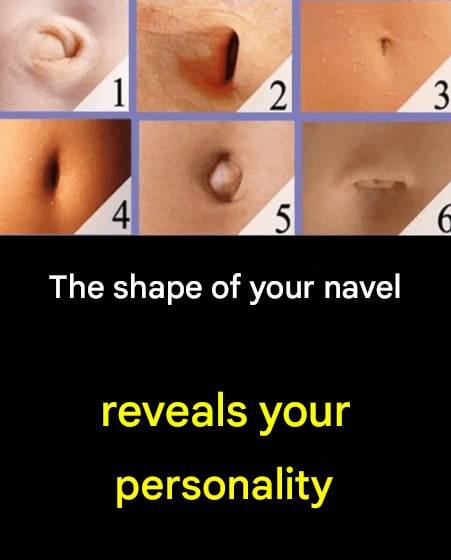
The idea that the shape of your belly button reveals your personality has circulated widely across social media and viral content platforms. Framed as light entertainment, such claims often assign character traits based on whether a navel appears inward, outward, round, vertical, or asymmetrical. While the concept is presented as playful self-discovery, it reflects a broader pattern of physiognomic thinking—the assumption that physical features can determine psychological traits. From a scientific and professional standpoint, there is no credible evidence supporting the notion that belly button shape has any correlation with personality.
An individual’s navel shape is primarily the result of how the umbilical cord healed after birth, along with factors such as scar formation, abdominal muscle structure, skin elasticity, and body composition. These are biological and anatomical outcomes, not behavioral indicators. Personality, by contrast, is shaped by a complex interaction of genetics, environment, social conditioning, cognitive development, and life experiences. Established psychological frameworks, including trait-based models such as the Five-Factor Model, rely on empirical research, longitudinal data, and validated assessment tools. No reputable psychological literature links abdominal scar patterns to behavioral tendencies.
The persistence of such claims highlights how easily visual simplicity can be mistaken for meaningful insight. Content that reduces identity to a single visible trait performs well in attention-driven digital environments because it offers instant categorization without effort. For publishers and business leaders operating in digital media, this trend provides a relevant case study in audience psychology. Simplified identity narratives attract engagement, but they do not build long-term authority or trust. Sustainable publishing strategies depend on accuracy, transparency, and responsible framing rather than novelty-driven speculation.
For organizations monetizing content through advertising platforms, maintaining credibility is not only an ethical responsibility but also a strategic imperative. Platforms that reward high-quality, trustworthy information increasingly prioritize content aligned with established expertise and reliable sourcing. Publishing unverified personality claims as fact can erode audience confidence and weaken brand positioning over time. Even when presented as entertainment, clarity about the lack of scientific support protects both readers and publishers from misinformation risks.
More broadly, the appeal of personality-based classification reflects a genuine demand for self-understanding. Businesses in the assessment, coaching, and human development sectors address this demand through structured methodologies grounded in research and validated metrics. Professional-grade personality assessment tools focus on measurable traits, predictive reliability, and responsible interpretation. These frameworks contribute to leadership development, team performance optimization, and strategic workforce planning—applications that extend far beyond casual entertainment.
The broader lesson for content strategists is clear. High-performing evergreen content balances reader curiosity with factual integrity. Topics that attract attention can be valuable entry points, but long-term growth depends on reinforcing trust through accurate explanation and contextual depth. In the case of belly button shape and personality, the responsible conclusion is straightforward: physical navel variations are biological characteristics with no demonstrated psychological meaning. Recognizing the difference between viral novelty and evidence-based insight is essential for maintaining authority, sustaining monetization, and building a resilient content portfolio.