As we get older, small changes in the body can become more noticeable. Nails are no exception. If you’re over 40 and have started to see lines running across or along your nails, it may be a normal part of aging — but in some cases, it can also reflect changes in your overall health.
Understanding what different nail lines mean can help you decide whether they’re harmless or worth discussing with a healthcare professional.
Why Nails Change After 40
Nails are made of keratin, the same protein found in hair and skin. As we age:
-
Nail growth tends to slow down
-
Blood circulation may decrease slightly
-
The nail plate can become drier and more brittle
These natural changes often make lines more visible, especially longitudinal ridges (vertical lines). In many cases, this is simply a normal sign of aging.
However, not all nail lines are the same.
Vertical Lines (Longitudinal Ridges)
Vertical lines that run from the cuticle to the tip of the nail are very common after 40.
What They Usually Mean
-
Normal aging
-
Mild dehydration of the nail plate
-
Reduced natural oil production
These ridges often become more noticeable with time and are typically harmless.
When to Pay Attention
If vertical ridges are accompanied by:
-
Splitting or peeling
-
Significant brittleness
-
Changes in nail color
It could signal nutritional deficiencies, such as low iron or B vitamins, or underlying thyroid issues. A medical evaluation can help clarify the cause.
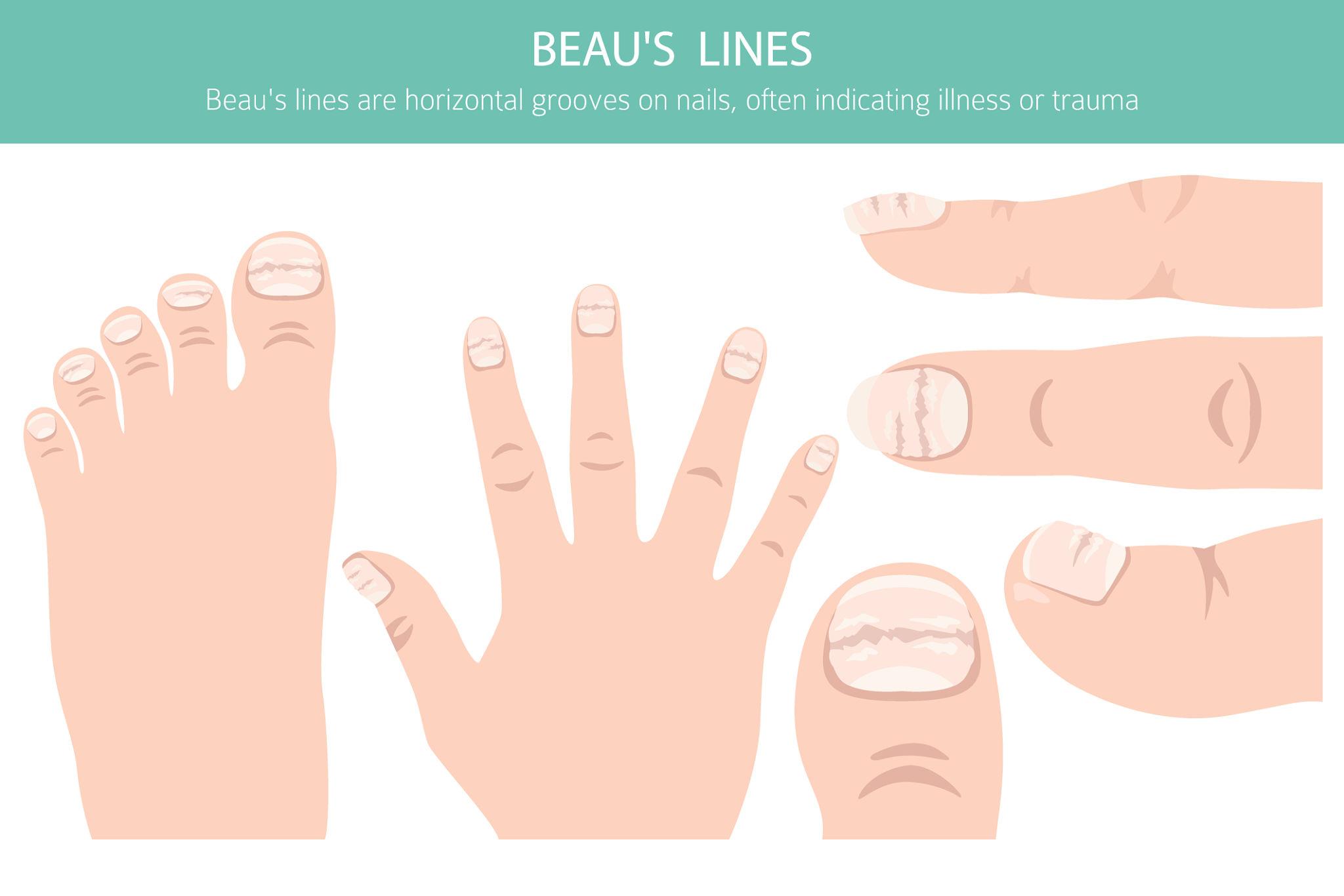
Horizontal Lines (Beau’s Lines)
Horizontal indentations that run across the nail are known as Beau’s lines.
What They Can Indicate
Beau’s lines usually form when nail growth temporarily slows or stops due to:
-
Severe illness
-
High fever
-
Major stress
-
Surgery
-
Poorly controlled diabetes
Because fingernails grow slowly (about 3 millimeters per month), these lines often appear weeks after the triggering event.
If you notice deep horizontal grooves without a clear reason, it’s wise to consult a doctor.
Dark Lines or Streaks
A single dark vertical line under the nail can sometimes be a pigment streak. In many cases, it’s benign — especially in people with darker skin tones.
However, a new or changing dark streak, especially one that:
-
Widens over time
-
Has irregular borders
-
Extends into the surrounding skin
should be evaluated promptly to rule out serious conditions, including subungual melanoma.
Any sudden pigment change warrants medical attention.
White Lines Across the Nail
White horizontal lines (not indentations) may appear due to:
-
Minor nail trauma
-
Temporary growth disruption
-
Low protein levels in rare cases
Small white marks are usually harmless and grow out naturally. Persistent, wide white bands across multiple nails, however, may require medical evaluation.
Brittle Nails with Lines
If nail lines are combined with dryness, cracking, and frequent breakage, this may indicate:
-
Age-related thinning
-
Iron deficiency anemia
-
Thyroid disorders
-
Excessive exposure to water or chemicals
Routine blood work can help identify underlying causes if symptoms are persistent.
When Nail Lines Are Simply Aging
For most people over 40, vertical ridges are a normal structural change. As long as:
-
Nail color remains consistent
-
There is no pain or swelling
-
The lines are shallow and symmetrical
there is usually no cause for concern.
Keeping nails moisturized and maintaining a balanced diet can support nail health.
When to See a Doctor
Seek medical advice if you notice:
-
Sudden or severe horizontal grooves
-
Rapid changes in nail color
-
A new dark streak
-
Thickening or distortion of one nail only
-
Nail changes along with fatigue, hair loss, or unexplained weight changes
Nails can reflect broader health patterns, and sometimes they are the first visible sign of an internal issue.
The Bottom Line
If you have lines on your nails after 40, it is often a clear sign of natural aging. Vertical ridges are especially common and usually harmless.
However, certain patterns — particularly deep horizontal grooves, sudden pigment changes, or lines paired with other symptoms — may signal an underlying health concern. Paying attention to these details can help you respond early and appropriately.
When in doubt, a healthcare professional can provide reassurance or recommend further evaluation. Nails may seem like a small detail, but they can offer meaningful clues about overall health.